An OWI sentencing Michigan court date is the hearing where the judge imposes the sentence after a plea or a trial verdict. It is a formal court session. It is also the date when many people first hear, in one place, the court terms and the license consequences that will follow.
Sentencing is not a second trial. The charge has already been resolved by a plea or a finding of guilt. The question now is what the court will order. This guide from Fragel Law explains what to expect during the sentencing process.

This guide explains the usual flow of the hearing. It is general information, not legal advice. The terms in your case depend on the charge, your record and the court.
Key Takeaways
- Sentencing comes after a plea or a verdict, not at the first court date.
- The judge may review a presentence report, your record and any statements before imposing terms.
- Court terms can include probation, testing, treatment, community service, jail or a combination of those.
- License action by the Secretary of State is a separate process, though the conviction starts that clock.
- Prepare with your lawyer, arrive early and follow every term in the order you receive.
When Does OWI Sentencing Michigan Courts Schedule?
An OWI sentencing Michigan date is set after the case is resolved. If you enter a plea, the judge may sentence you the same day or set a later date. If the case went to trial, sentencing is usually set for a later hearing so a presentence report can be prepared.
Some first-offense misdemeanor matters are sentenced quickly. Cases with prior convictions, a felony charge or a request for a specialty court may take longer to schedule.
Between the plea or verdict and the sentencing date, you remain bound by your bond conditions. Keep testing, stay in touch with your lawyer and do not miss any appointment the court has already ordered.
If you have not yet reached this stage and want a wider view of the OWI process, start there, then return to this page as the date gets closer.
What Is a Presentence Report?
In many cases, especially more serious ones, a probation officer or the court staff prepares a presentence report. The report may cover your record, work, family, substance use and the facts of the case. You may be asked to take part in an interview.
Be truthful and brief. Do not guess. If you do not remember a date, say so. Your lawyer can help you prepare for that interview.
The judge can consider the report, along with the charge, the plea agreement if there is one, and any statements from you or from the prosecutor. You have a chance to correct errors. Read the report with your lawyer before the hearing if it is available.
What Happens in the Hearing Itself?
The judge calls the case. The lawyers may note whether a plea agreement exists and whether any terms are agreed or left to the court. The judge may ask if you have read the report and if there are corrections.
The prosecutor may speak. Your lawyer may speak. You may also be invited to make a short statement. You do not have to speak at length. If you do, keep it respectful and honest. This is not the time to re-try the case.
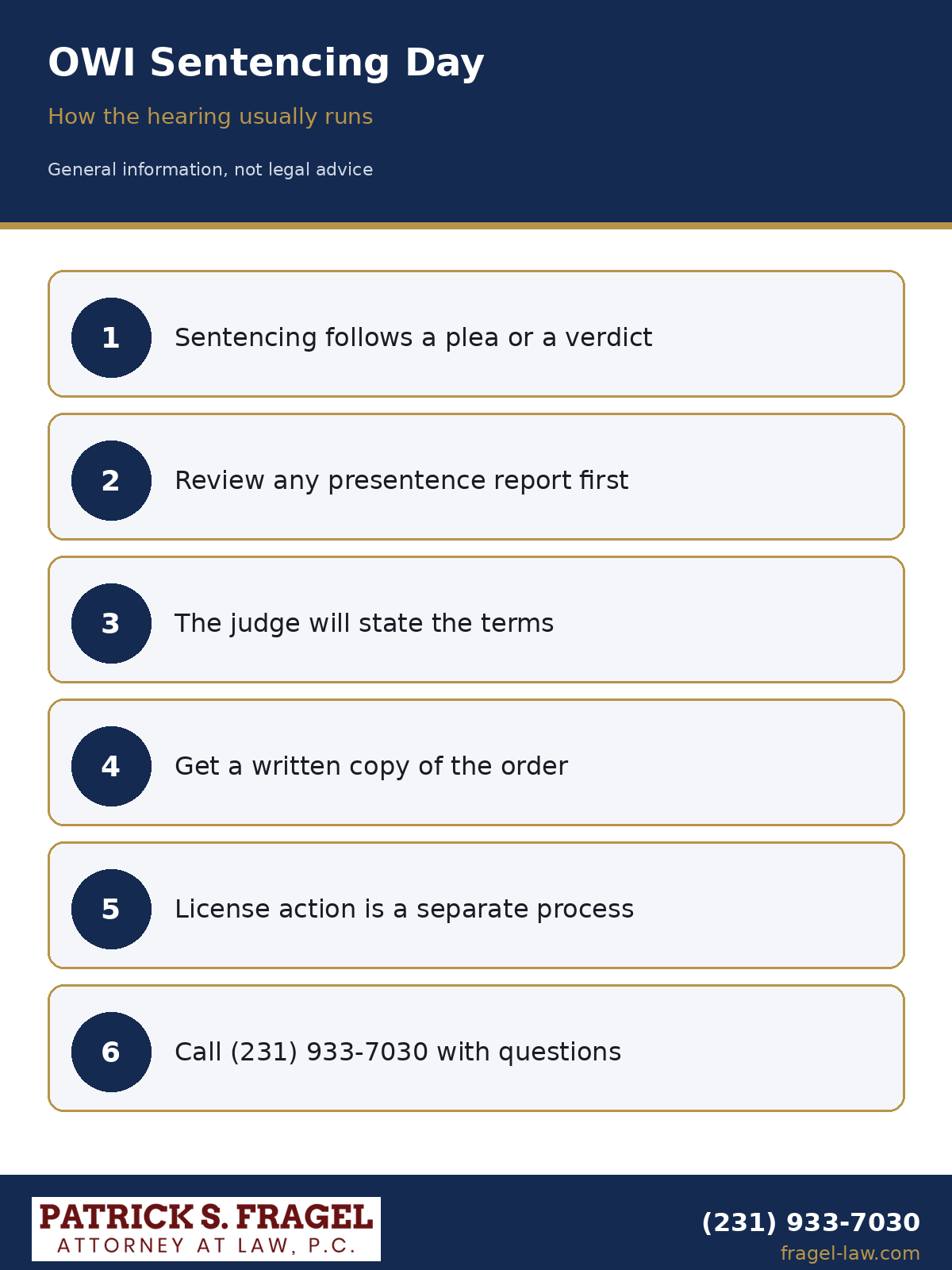
The judge then imposes the OWI sentencing Michigan terms. Listen carefully. If you do not understand a term, ask your lawyer before you leave the courthouse.
You will usually receive a written order or judgment. Keep it. You may need it for probation, for the Secretary of State and for work.
Courts in Traverse City, Gaylord, Grayling and Charlevoix all follow Michigan law, but local practice can differ. Ask your lawyer what to expect in the courthouse where you will appear.
What Terms Can the Court Include?
Possible terms vary with the charge and your record. They may include:
- A term of probation, with reporting and rules you must follow
- Alcohol or drug testing
- A substance use evaluation and any recommended treatment
- Community service
- A jail term, or a jail term that is delayed or held in abeyance on conditions
- An ignition interlock as a condition of probation or of a restricted license
- Other conditions the court has authority to set, such as no drinking or no driving without a valid license
We do not list dollar amounts here. Costs, fines and fees are set by law and by the court, and they should come from your order, not from a blog post.
A specialty court or sobriety court path, if one is available and you are admitted, can also change the conditions you face. That path has its own rules and is not automatic.
How Does Sentencing Affect Your License?
The court sentence and the Secretary of State license action are related but not the same. When the conviction is reported, the Secretary of State applies the suspension or revocation rules in MCL 257.319 and related sections.
A first OWI, a high-BAC OWI and a repeat conviction do not carry the same license results. Some drivers may later qualify for a restricted license. Others face a revocation and must later seek restoration.
For a plain-language review of timelines, see our guide on how long a Michigan license may be suspended after an OWI. If the long-term issue is getting a license back, review our drivers license restoration page as well.
Do not drive home from sentencing unless you know you are legally allowed to drive. Ask before you leave.
How Should You Prepare?
- Meet with your lawyer before the date and review the report if one exists.
- Gather proof of work, treatment, testing or classes you have already started.
- Arrange a ride to court.
- Dress neatly and arrive early.
- If you will speak, plan a short, honest statement with your lawyer.
- After the hearing, get a copy of the order and put every date on a calendar.
If you are already on bond, keep those conditions until the court changes them. A positive test or a missed date before sentencing can change what the judge is willing to do.
| Sentencing step | What to expect | Your role |
|---|---|---|
| Before the date | Report, interview and meeting with your lawyer | Be truthful, gather documents and plan a ride |
| Start of the hearing | Charge, plea or verdict and any agreement are confirmed | Listen and stand when the court directs |
| Statements | Prosecutor, defense and, if you wish, you may speak | Keep any statement short and honest |
| The order | The judge imposes terms and you receive written papers | Ask questions before you leave and follow the order |
If you have an upcoming OWI sentencing Michigan date and want to review the file, call Fragel Law at 231-933-7030 or use our contact page. You can also meet Attorney Patrick S. Fragel at our Traverse City office. This article is general information about Michigan law, not legal advice, and it does not create an attorney-client relationship.
Frequently Asked Questions
Q: Will I go to jail at an OWI sentencing in Michigan?
A: It depends on the charge, your record and the court. Some first-offense cases do not include a jail term. Others do. Do not rely on a friend’s case as a guide. Ask your lawyer what the charge allows and what the court in your county often does.
Q: Can I speak to the judge?
A: Usually you may make a short statement. You are not required to give a long speech. Talk with your lawyer first about whether a statement helps and what to say.
Q: Does sentencing end my license problems?
A: No. The court order and the Secretary of State action are separate. The conviction can start or continue a license suspension or revocation even after the hearing ends.
Q: What if I cannot complete a term of the sentence?
A: Call your lawyer or probation officer before you miss a date. A missed test, a missed class or a missed report can lead to a probation violation. It is better to ask for guidance early than to let a problem grow.