If you have an OWI charge in Michigan and a prior drunk driving conviction, your past can change your future. Michigan uses “lookback periods” to decide whether a new case counts as a first, second or third offense. The level of the charge affects jail time, fines, license penalties and whether the case is a misdemeanor or a felony. Here, Fragel Law explains how the OWI lookback period Michigan uses works.
What Is a Lookback Period?
A lookback period is the window of time the law uses to count prior convictions. If a prior conviction falls inside that window, the new charge can be treated as a repeat offense. If it falls outside, it may not count for that purpose.
How Is a Second Offense Counted?
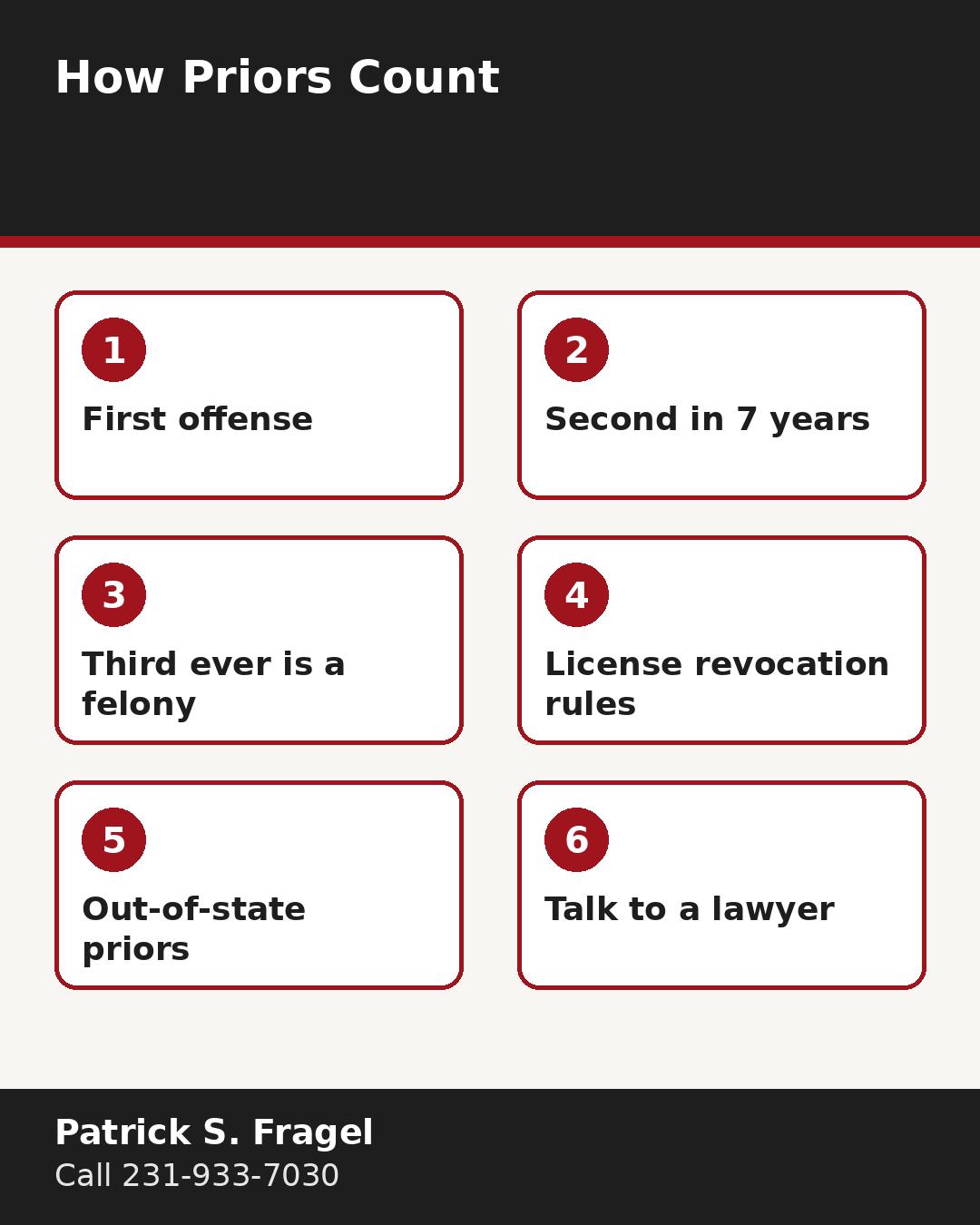
Under the Michigan Vehicle Code, a new OWI with one prior conviction within 7 years is generally charged as a second offense. A second offense is a misdemeanor in Michigan. It carries tougher penalties than a first offense, including possible jail time, community service and license consequences.
How Is a Third Offense Counted?
For a third offense, Michigan uses a lifetime lookback. If you have two or more prior OWI-type convictions at any time in your life, a new OWI can be charged as a felony. This is often called “OWI third.” A felony conviction can bring prison time and a lasting record.

What Counts as a Prior?
Prior convictions can include more than just OWI. Depending on the law, they can include impaired driving, some drugged driving offenses and similar offenses from other states. Out-of-state convictions can count if they match Michigan’s laws. A lawyer should review your full record.
How Do Priors Affect Your License?
The Secretary of State handles license penalties separately from the court. Prior convictions can lead to license revocation instead of suspension. For example, Michigan law generally requires revocation for two qualifying convictions within 7 years or three within 10 years. After a revocation, you may need to win a hearing to get your license back.
Can the Lookback Be Challenged?
Sometimes. A lawyer may look at whether a prior conviction is valid, whether the dates are right and whether an out-of-state offense really matches Michigan law. Errors do happen. Every detail of a prior can matter.
| Situation | General effect |
|---|---|
| No priors in 7 years | Often treated as a first offense |
| One prior within 7 years | Often charged as a second offense |
| Two or more priors, any time | Can be charged as a felony |
| Out-of-state priors | Can count if similar to Michigan law |
| Multiple priors | Can lead to license revocation |
What About Habitual Offender Charges?
If you have other felony convictions, prosecutors may also seek a habitual offender enhancement. This can raise the maximum sentence. Combined with a felony OWI, the stakes can be very high.
Why Talk to a Lawyer Early?
The charge level is often set early in the case. A lawyer can review your record, check for errors and explain your options. Early help can make a difference. Learn more about OWI defense and felony charges.
Tips If You Have Prior Convictions
- Gather court records from past cases.
- Get a copy of your driving record.
- Be honest with your lawyer about your history.
- Follow all bond conditions.
- Do not drive if your license is suspended or revoked.
A Simple Way to Think About Priors
Ask two questions. First, how many prior OWI-type convictions do you have? Second, when were they? One prior in 7 years often means a second offense. Two or more priors at any time can mean a felony. The license rules use their own time frames. Your lawyer can check each date. Small details can change the charge.
What to Bring to Your First Meeting
Bring your ticket or charging papers. Bring your bond papers. Bring records from past cases if you have them. Bring your driving record. Write down what happened during the stop. Write down any questions. The more your lawyer knows, the better they can help.
How Does a Repeat Charge Change the Case?
A repeat charge can mean higher fines. It can mean more jail time. It can mean a longer loss of your license. It can mean more court dates. Each step matters. Ask your lawyer to walk you through the full picture.
Why Records Can Be Wrong
Court and state records are kept by people. Mistakes happen. A date may be wrong. A case may be listed twice. A charge may have been reduced but not updated. An old case may have been set aside. Your lawyer can order certified records and compare them. Fixing one error can change how a new case is charged.
Common Mistakes to Avoid
- Assuming an old conviction will not count
- Forgetting about out-of-state convictions
- Waiting to get legal help
- Driving while your case is pending against court orders
Get Experienced Help
The OWI lookback period Michigan uses can turn a misdemeanor into a felony. Attorney Patrick S. Fragel is a former prosecutor and U.S. Army veteran with more than 25 years of trial experience serving northern Michigan. If you have questions about your situation, call Patrick S. Fragel, Attorney at Law, P.C. at 231-933-7030 or contact the firm online for a confidential consultation.
This article is general information about Michigan law, not legal advice. Reading it does not create an attorney-client relationship. Every case is different, and laws change. Talk with a licensed Michigan attorney about your situation.
FAQ
Q: How far back does Michigan look for OWI convictions?
A: Generally 7 years for a second offense and a lifetime for a third offense.
Q: Is a third OWI a felony in Michigan?
A: It can be charged as a felony if you have two or more prior convictions at any time.
Q: Do out-of-state DUI convictions count?
A: They can count if they match Michigan offenses.
Q: Can a second OWI lead to license revocation?
A: Yes. Two qualifying convictions within 7 years generally lead to revocation.
Q: Can a lawyer challenge a prior conviction?
A: Sometimes, if there are errors or legal problems with the prior.